More insights.

Meta Is Putting an Automated Agent Inside Your WhatsApp.
Siri has been on iPhones since 2011. For most of that time, it has been the butt of the same joke: ask it something slightly complex and it falls apart. At WWDC 2026, Apple tried to close that chapter.
The company announced that Siri is being renamed Siri AI and rebuilt from the ground up, with a set of capabilities that puts it in direct competition with ChatGPT, Google Gemini, and other modern assistants. The update is part of Apple's wider push under the Apple Intelligence banner, and it represents the most significant change to Siri since its original launch.
What is Siri AI?
Siri AI is Apple's overhauled voice and text assistant, announced at the Worldwide Developers Conference on June 8, 2026. Unlike the previous version of Siri, which handled isolated commands, Siri AI can search across the device, including photos, messages, and calendar data, as well as the open web, to answer questions and complete tasks. It is powered in part by Google Gemini, following a partnership Apple announced in January 2026.
What Siri AI Can Now Do
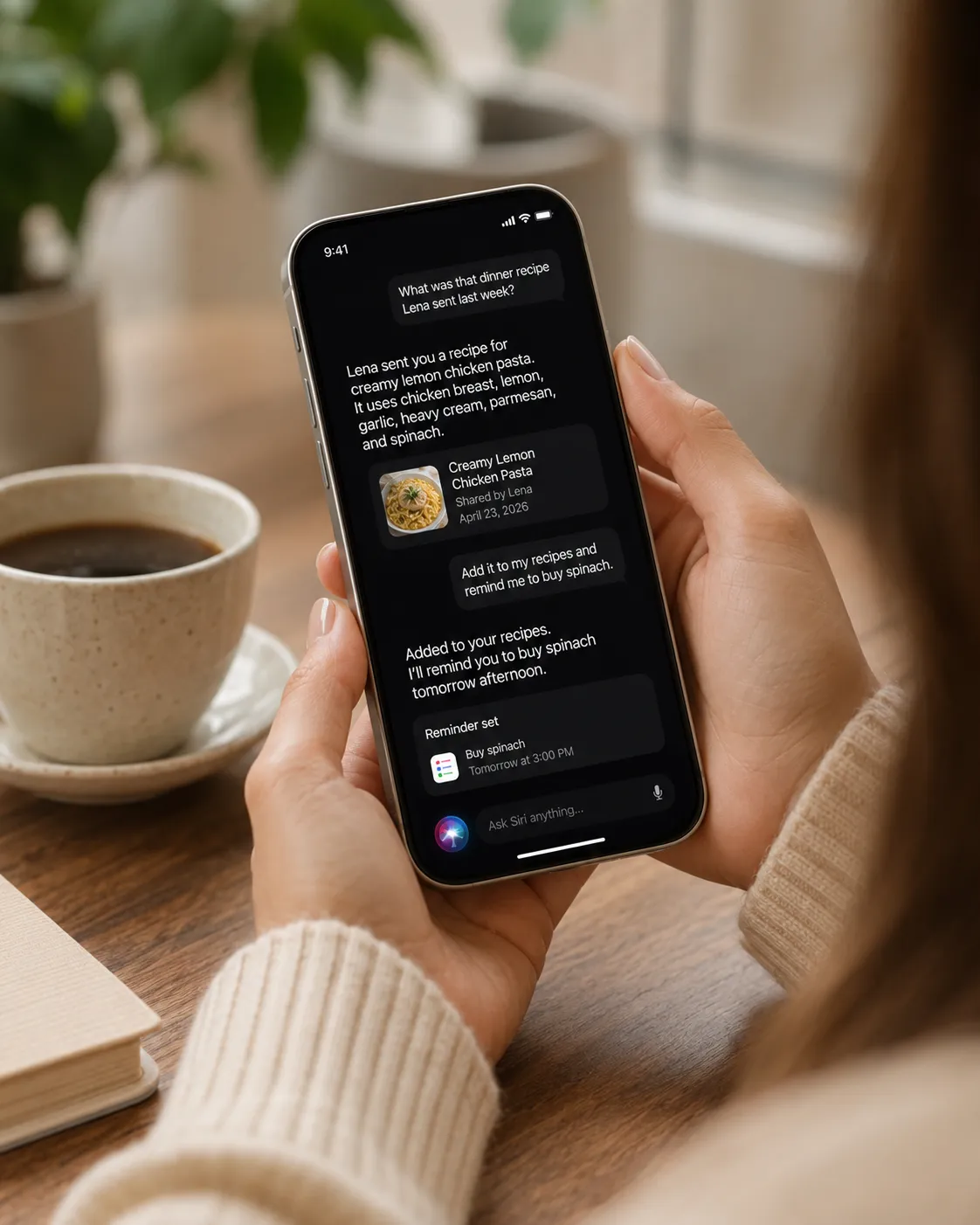
The demonstrations at WWDC showed Siri AI handling tasks that would have stumped the old version completely: looking up a concert date by searching through past messages, helping plan a watch party, and assisting with shopping decisions by combining device data with web search.
Apple's VP of Siri engineering, Mike Rockwell, described it as an assistant that can find what you need and get more done. That is a deliberately broad claim, but the examples shown were grounded in everyday use rather than showcase scenarios designed purely for the stage.
One notable feature is the keyboard integration. Because Siri AI is built directly into the keyboard, it is accessible across the entire operating system without switching to a separate app. You can use it while texting, while writing notes, or while browsing. For iPhone users, that is a different kind of convenience from opening ChatGPT or Gemini as a standalone app.
Apple also highlighted calendar and reminder creation as areas where Siri AI should require fewer steps than a third-party assistant, because it already has full access to your device's data without requiring you to grant permissions each time.
The Google Partnership Behind It
Apple and Google are simultaneously competitors and collaborators in this update. Apple confirmed in January 2026 that it had partnered with Google to use Gemini as part of the engine powering Siri AI. This is significant for two reasons.
First, it means Apple is not trying to build a large language model entirely from scratch to compete at the frontier. Instead, it is combining its deep device integration with Google's model capabilities. Second, it puts Google's technology inside Apple's most personal product, which is an unusual arrangement given how directly these two companies compete in the smartphone market.
Whether this partnership produces a better experience than either company would deliver alone is something users will judge once the product ships.
What the Rollout Looks Like
Siri AI will be available later in 2026 on iPhones, iPads, and Macs. The initial launch will be in English only, with other languages to follow. Apple confirmed the assistant will not be available at launch in the European Union or China, where regulatory requirements need to be worked through first.
For users in the GCC, including Qatar, English-first availability means the core product should be accessible from day one. Arabic language support will depend on how quickly Apple expands beyond the initial rollout.
What This Means for Brands and Marketers
Voice search has been a topic in digital marketing for years, mostly in the abstract. Siri AI changes the equation in a concrete way. If a significant portion of iPhone users start using Siri AI for everyday queries, including searches that would previously have gone straight to Google, the implications for how brands are discovered online are real.
Siri AI draws from both device data and the open web to answer questions. That means well-structured website content, clear service descriptions, and accurate business information become even more important. An assistant that can pull an answer directly from your website and present it to a user who never actually visits the page is both an opportunity and a challenge, depending on how well your content is set up.
At finoon, we work with brands in Qatar and the GCC on content strategy, website development, and digital marketing. As voice and AI-powered discovery becomes a bigger part of how people find businesses, the brands with clear, well-organised online presence will have a clear advantage. If you want to understand how your current digital setup performs in this environment, reach out to the finoon team.
Is This a Real Shift or a Rebranding Exercise?
That question is fair. Siri has been promised improvements before and delivered underwhelming ones. The rename to Siri AI could be read as Apple trying to signal participation in a trend more than delivering a genuine product leap.
The difference this time is the partnership with Google Gemini and the specific emphasis on device-level data integration. Those are structural changes, not cosmetic ones. Whether the everyday experience lives up to the keynote is something only users will be able to confirm once the product is in their hands later this year.
What is clear is that Apple is no longer treating Siri as a secondary feature. The keynote gave it significant time, Apple executives demoed it personally, and the rebrand signals a long-term commitment to competing seriously in the assistant space.
The Bottom Line
Apple renamed Siri to Siri AI and gave it a genuine overhaul at WWDC 2026. The new version is powered partly by Google Gemini, searches across device data and the web, and is built directly into the keyboard for system-wide access. It launches later in 2026 in English, with broader language support to follow.
For businesses, the more important shift is what happens to search and discovery behaviour when a well-functioning voice assistant sits inside the device a billion people use every day. That is worth paying attention to now, not after the product ships.
Frequently Asked Questions
What is Siri AI and how is it different from the old Siri?
Siri AI is Apple's renamed and rebuilt voice assistant, announced at WWDC 2026. Unlike the previous version of Siri, it can search across your device, including photos, messages, and calendar data, as well as the open web. It is powered in part by Google Gemini and is designed to handle more complex, multi-step tasks.
When will Siri AI be available?
Apple said Siri AI will be available later in 2026 on iPhones, iPads, and Macs. It will launch in English first, with other languages added over time. It will not be available at launch in the European Union or China due to regulatory requirements.
Does Siri AI use Google's technology?
Yes. Apple announced a partnership with Google in January 2026 and confirmed at WWDC that Siri AI is powered in part by Google Gemini. Apple combines this with its own device-level data access to provide answers that a standalone third-party assistant cannot easily replicate.
Will Siri AI replace Google search on iPhones?
Not directly. Siri AI draws from both the open web and device data, so it may handle queries that would previously have gone to a search engine. However, Google remains Apple's default search engine, and the two companies have an active partnership in this space.
What does the Siri AI update mean for businesses?
If iPhone users increasingly ask Siri AI instead of searching manually, businesses need their website content to be structured clearly so it can be understood and referenced by an assistant. Accurate business information, clear service pages, and well-written content become more important, not less, in this environment.